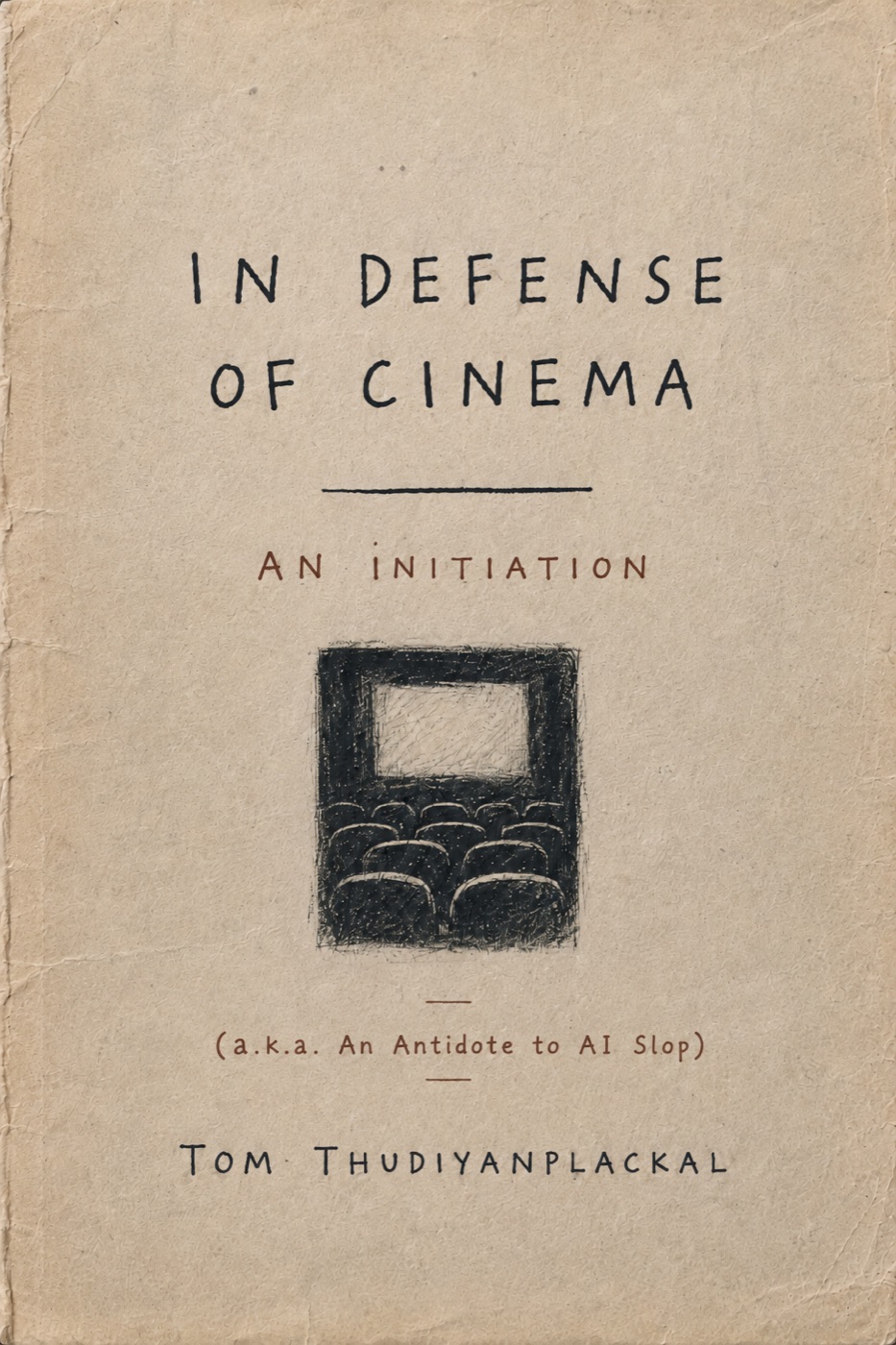
What the book is
Not a study. A defense.
Cinema, in the strict sense this book reclaims, is not the broad category of moving-image entertainment. It is an art form arrived at only through the thorough distillation of ideas down to their essences — a discipline of vision pursued the way intellectuals once pursued scientific inquiry, metaphysical discourse, and prophecy. Though every work deserving the title is also a movie, not every movie should be confused for cinema.
Across five parts, the book establishes what cinema is, traces the lineage it inherits, holds up the witnesses who carried the form across its first century, diagnoses what has been done to it across its second — the captured world, the weaponized mind, the cookie cutter, the three deceits — and names what is now required of the practitioner and the audience who would defend it.
The voice is not the voice of a scholar conducting a balanced examination. It is the voice of someone who has been changed by the encounters the book defends, written in a register the author describes plainly: a sermon delivered at a funeral by someone who actually loved the dead. It is dense by design, repetitive by design, and unapologetic about both.